
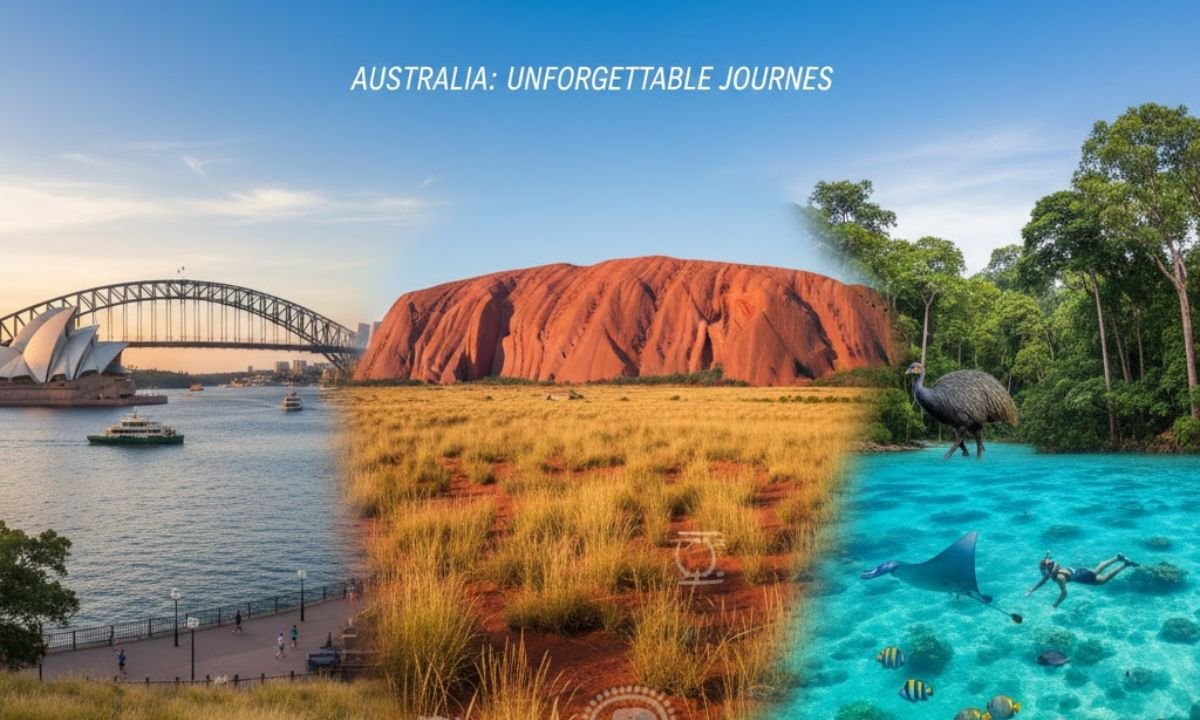

Australia offers a mix of wild nature, vibrant cities and unique culture, so planning your route around its most iconic attractions can turn a good holiday into an unforgettable one. This guide focuses on must-visit places that are safe, well-connected and ideal for first-time as well as repeat travellers.
Sydney: Harbour Icons and City Vibes
Sydney is often the first stop for international visitors, and for good reason: the sweeping curves of the Sydney Opera House and the towering Sydney Harbour Bridge instantly tell you that you have arrived in Australia. Walking around Circular Quay and The Rocks gives you easy access to harbour cruises, museums, and relaxed waterfront dining, all in a compact, walkable area.
Bondi Beach, just a short ride from the city centre, combines golden sand, surf culture and a famous coastal walk to Coogee where you can enjoy ocean pools and cliff-top views. Families appreciate Sydney’s efficient public transport, safe neighbourhoods and clear signage, which make getting around simple even if it is your first time in the country.
Snapshot of Key Australian Attractions
Great Barrier Reef and Tropical North Queensland
The Great Barrier Reef, stretching along Queensland’s coast, is one of the world’s most celebrated natural wonders and a UNESCO World Heritage Site. From hubs like Cairns and Port Douglas, you can join organised boat tours that provide safety briefings, life jackets, snorkelling gear and professional guides, which is especially reassuring for beginners and families.
Beyond the reef itself, the surrounding region offers lush rainforests such as the Daintree, where boardwalks and guided tours help you experience the tropics without compromising on safety. Many operators now emphasise reef-friendly practices and clear environmental briefings, so you can travel responsibly while supporting conservation of this fragile ecosystem.
Uluru and Australia’s Red Centre
Uluru, the immense sandstone monolith rising from the desert in the Northern Territory, is both a natural spectacle and a sacred site for the Anangu people. Sunrise and sunset tours allow you to watch its colours shift from deep purple to glowing red, while learning about Aboriginal stories and traditions from accredited local guides.
The Uluru–Kata Tjuta National Park is well-managed with marked paths, clear safety information, and restrictions that protect culturally sensitive areas, so visitors can explore with respect. Rather than climbing the rock, which is now prohibited, travellers can walk or cycle around its base, visit the cultural centre, and join small-group experiences that prioritise cultural understanding and safe, low-impact travel.
Melbourne, Culture and the Great Ocean Road
Melbourne is known as Australia’s cultural heart, with hidden laneways, street art, independent cafes and a strong live sports scene. Its efficient tram network and walkable central grid make it easy to explore galleries, riverside promenades and neighbourhood markets without needing a car, which suits both solo travellers and families.
From Melbourne, many visitors head out on the Great Ocean Road, a legendary coastal drive that features the Twelve Apostles rock formations, surf towns and rainforest pockets. Lookouts, visitor centres and safety barriers along the route are designed to handle heavy visitor numbers, helping you enjoy dramatic ocean scenery while following clearly marked paths and driving guidelines.
Tasmania and Other Natural Highlights
Tasmania, the island state south of the mainland, is a standout for travellers who love hiking, wildlife and fresh air. National parks such as Freycinet and the Tasmanian Wilderness World Heritage Area offer well-signed trails, maintained facilities and ranger support, which makes venturing into remote landscapes both rewarding and controlled.
Elsewhere in Australia, destinations like Kangaroo Island, the Blue Mountains near Sydney and the Ningaloo Coast in Western Australia add extra layers to your itinerary, from whale sharks to eucalyptus forests. Many of these regions limit visitor numbers on sensitive sites, use guided tours and provide clear safety messaging, aligning with modern expectations for responsible, trustworthy and traveller-friendly experiences.
FAQs
Q1. What is the best time to visit Australia for sightseeing?
The most comfortable months for many regions are typically spring and autumn, when temperatures are milder and outdoor activities are easier to enjoy.
Q2. Is it safe to self-drive in Australia as a tourist?
Self-driving is common and generally safe on well-maintained highways, provided you follow local road rules, rest frequently and avoid long night drives in remote areas.
Q3. How many weeks do I need to see the main attractions?
To cover Sydney, the Great Barrier Reef, Uluru and one more region at a relaxed pace, many travellers plan for at least two to three weeks in Australia.
