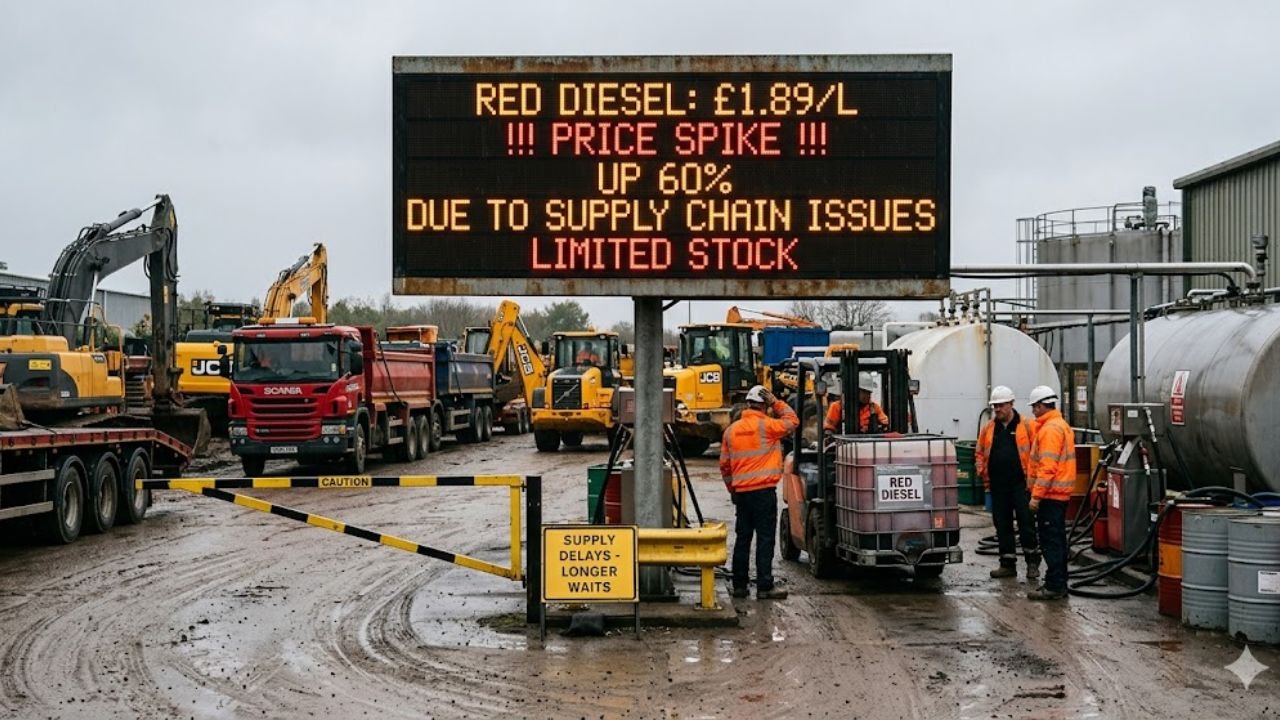
High diesel prices have triggered major supply chain disruptions across the UK, largely driven by geopolitical tensions in the Middle East. In early 2026, red diesel prices surged by approximately 60%, placing significant strain on multiple industries.
The crisis began in February 2026, when conflict in the Middle East affected the Strait of Hormuz, a critical global energy route responsible for transporting around 20% of the world’s oil and gas. Disruptions in this region have forced changes in shipping routes and reduced fuel flows, leaving the gas oil sector struggling to adapt to rapid price increases.
Impact of Supply Constraints and Policy Changes
Unlike road diesel, red diesel has faced tighter supply conditions since the UK government’s 2022 restrictions on its use. These limitations have reduced wholesalers’ ability to maintain large reserves, making the market less flexible during supply shocks.
Although red diesel initially saw slower price increases compared to road diesel, its lower supply base has now intensified price volatility. Industries such as agriculture, maritime, and heating are experiencing sharp cost increases as a result.
The rerouting of shipping traffic around the Cape of Good Hope and military disruptions have further strained global supply chains. Experts warn that the current situation may worsen due to limited market control mechanisms during geopolitical crises.
Why Red Diesel Prices Are Rising Faster
One of the key reasons for the sharp rise in red diesel prices is its lower fuel duty. Red diesel is taxed at approximately 11p per litre, compared to around 53p per litre for standard road diesel. This means the wholesale price makes up a much larger proportion of the final cost.
As a result, fluctuations in crude oil prices have a more direct and amplified effect on red diesel. When global oil prices rise sharply, the limited tax buffer leaves farmers and contractors exposed to the full impact of the increase.
Rising Costs Threaten Agriculture and Food Security
March is a critical month for agriculture, with spring field preparations driving peak fuel demand. For an average arable farm, fuel accounts for around 15% of total production costs.
Prices have jumped dramatically—from around 67p per litre in February to as high as 135p per litre in mid-March—raising concerns about the financial viability of the 2026 crop season.
These rising costs are expected to ripple through the food supply chain, increasing production and transportation expenses. This could lead to higher prices for consumers and renewed food inflation across the UK.
The National Farmers’ Union has warned that sustained high energy costs could reverse recent progress in stabilizing food prices, potentially triggering a broader cost-of-living crisis.
Regional Red Diesel Price Comparison
Region
February 2026 (p/litre)
March 2026 (p/litre)
Increase
North East & Scotland
66.5p
108.4p
63%
Midlands
67.2p
106.8p
59%
South West
68.1p
110.2p
62%
South East
67.5p
109.5p
62%
Northern Ireland
65.8p
104.2p
58%
Market Volatility and Industry Concerns
The Department for Environment, Food & Rural Affairs (Defra) is actively monitoring fuel and fertilizer markets due to extreme volatility. Farmers report receiving different price quotes from suppliers within hours, raising concerns about potential profiteering.
Fuel suppliers attribute price increases to the higher cost of replenishing stock, but the pricing structure remains unclear to many in the industry. This lack of transparency has created distrust in the short-term market.
Experts are advising farmers to maintain higher fuel reserves and adopt a “just-in-case” approach, rather than relying on traditional “just-in-time” supply chains.
Security Risks and Economic Impact
With fuel prices rising, rural businesses are also facing increased risks of fuel theft. Enhanced security measures for storage tanks are being strongly recommended.
The broader economic impact is significant. The Bank of England has set interest rates at 3.75% in response to inflation driven by rising energy costs. Higher fuel prices are increasing haulage expenses and driving up the cost of key agricultural inputs such as fertilizers.
This interconnected crisis highlights how global supply disruptions can directly affect local farming operations, even in regions far from the source of conflict.
Long-Term Outlook and Industry Adaptation
The ongoing energy shock is forcing a strategic shift within the industry. There is a growing focus on securing domestic energy sources and accelerating the development of alternative technologies for heavy machinery.
As geopolitical uncertainty continues, businesses are prioritizing resilience and risk management to navigate future disruptions.
FAQs
Q1 Why is red diesel more affected by price increases?
Red diesel has a much lower fuel duty than road diesel, meaning the wholesale cost forms a larger portion of its price. This makes it more sensitive to global oil price changes.
Q2 Is there a shortage of red diesel in the UK?
There are reports of supply constraints, but not a complete shortage. Delivery delays and controlled distribution are affecting availability in certain regions.
Q3 How can farmers protect themselves from future price spikes?
Experts recommend maintaining higher fuel storage levels and improving tank security to prevent theft. Monitoring market trends and planning purchases strategically can also help manage costs.
Paradise Diving Club is a professional diving center that offers scuba diving, snorkeling, and underwater adventure experiences.