
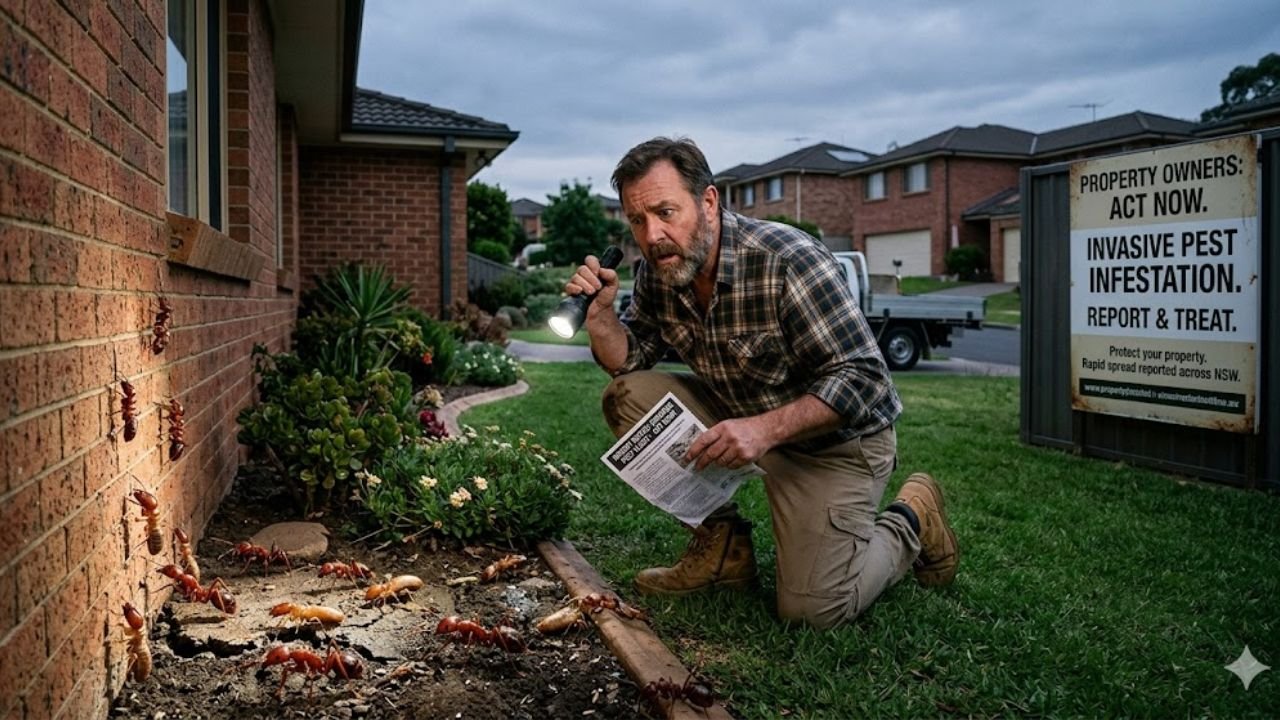

The Australian landscape is encountering one of the biggest biosecurity challenges in decades. As of March 2026, the government has warned landowners about the increasing spread of the Red Imported Fire Ant (Solenopsis invicta), emphasizing a growing outbreak across Australia.
After years of being confined to small pockets in Southeast Queensland, this invasive ant species is now being detected in ecologically sensitive areas, including the World Heritage rainforests of the Gold Coast hinterland and Northern New South Wales.
The rapid spread of Red Imported Fire Ants is a serious environmental concern and poses an imminent threat to Australia’s outdoor lifestyle, agriculture, and the safety of pets and livestock.
Fire Ant Eradication Program Urges Immediate Reporting
The Fire Ant Eradication Program advises landowners and property managers to take proactive steps instead of waiting for infestations to worsen. Reporting suspected infestations quickly is the most effective way to prevent fire ants from spreading into Australian backyards and communities.
Fire Ant Threat and Identification
The Red Imported Fire Ant differs significantly from native Australian ant species due to its aggressive behavior and unique nesting habits.
Fire ants build soil mounds that can hide large colonies beneath the surface. Unlike many ants, these mounds often have no visible entrance holes because the ants use underground tunnels that extend beyond the mound.
When a nest is disturbed, fire ants respond with a highly coordinated attack. Multiple stings can cause intense pain and may lead to allergic skin reactions, including the formation of white blisters.
Flooding events can further spread fire ants, as their colonies form floating rafts that allow them to travel to new locations. Countries experiencing heavy flooding in 2026 may face increased fire ant infestations as colonies migrate and establish new nests.
The economic impact could be severe. Experts estimate that uncontrolled fire ant infestations could cost Australia more than $45 billion due to damage caused through contaminated soil movement, potting mix, and landscaping materials.
Damage to Infrastructure and Agriculture
Fire ants pose a wide range of risks beyond painful stings. They are known to infest electrical equipment, destroy insulation, and cause short circuits that can lead to fires.
In agriculture, fire ants can damage crop root systems and attack newborn livestock. In heavily infested areas of the United States, fire ants have already changed how people use outdoor spaces, making parks, playgrounds, and backyards difficult or unsafe to use.
Major Threats Fire Ants Pose in Australia
- Public Health: Risk of severe allergic reactions and anaphylaxis from multiple stings
- Agriculture: Attacks on newborn calves and damage to crop root systems
- Infrastructure: Nesting in electrical systems, utility boxes, and under pavements
- Environment: Decline in ground-dwelling birds, reptiles, and native insects
- Lifestyle: Closure of parks, sports fields, playgrounds, and golf courses
Biosecurity Measures for Property Owners
In response to the expanding fire ant invasion, the Australian government has introduced strict biosecurity measures. The most recent restrictions introduced in early 2026 affect areas including Lockyer Valley, Scenic Rim, and the City of Gold Coast.
Property owners in these regions have a legal responsibility to avoid moving potential “fire ant carriers” without treatment or proper permits. These carriers include materials that contain soil, such as mulch, turf, potted plants, and landscaping supplies.
Monthly Yard Checks Recommended
Experts recommend that residents conduct yard checks every month. One simple detection method involves placing a small amount of peanut butter on a stick in a shaded location.
If ants begin foraging on the bait, residents should carefully observe them. Suspected fire ant sightings should be reported to the relevant state authority within 24 hours.
In many cases, professional treatment may be provided at no cost through the National Fire Ant Eradication Program.
Residents are advised not to disturb nests. Attempting to destroy a colony without professional treatment can cause the queen to move deeper underground and split the colony, potentially worsening the infestation.
Part of a Larger Invasive Species Crisis
Australia’s fire ant challenge is part of a broader global issue involving invasive species. Other major threats include the Varroa mite affecting honeybee populations and the Electric Ant in Far North Queensland.
Biosecurity experts stress that the most effective and affordable control strategy is early detection and rapid response.
Community Responsibility and Biosecurity
The fire ant eradication effort is a critical test of Australia’s national biosecurity system. Treatment days, movement controls, and public reporting programs are designed not only to protect individual properties but also to safeguard Australia’s unique ecosystems.
Residents play a vital role in identifying and reporting infestations. One neglected nest can quickly expand into a major outbreak affecting entire neighborhoods.
Conclusion: A Narrow Window for Eradication
Experts warn that the window for total eradication is narrowing. However, if communities act quickly and responsibly, successful control is still possible.
Property owners can download biosecurity apps or check official zone maps to monitor changes in quarantine areas. Biosecurity is a shared responsibility, and early reporting remains the most powerful tool in stopping the spread of fire ants.
With collective action, Australia can protect its landscapes, wildlife, and outdoor lifestyle from this destructive invasive pest.
FAQs
Q1 How can I identify fire ants compared to regular ants?
Fire ant nests usually appear as loose soil mounds without visible entrance holes. If the mound is disturbed, large numbers of ants will swarm aggressively and attempt to sting.
Q2 How can I get rid of them legally?
Residents should not attempt to destroy nests using boiling water or household insecticides. These methods often cause colonies to relocate and spread. Instead, report suspected sightings to the National Fire Ant Eradication Program by visiting www.fireants.nsw.gov.au or calling 13 25 23.
Q3 Are there laws about moving soil or mulch from an infested area?
Yes. The Biosecurity Act regulates the movement of materials such as soil, turf, hay, and mulch. Moving these materials from quarantine zones without following proper protocols can result in significant fines for individuals and businesses.
