
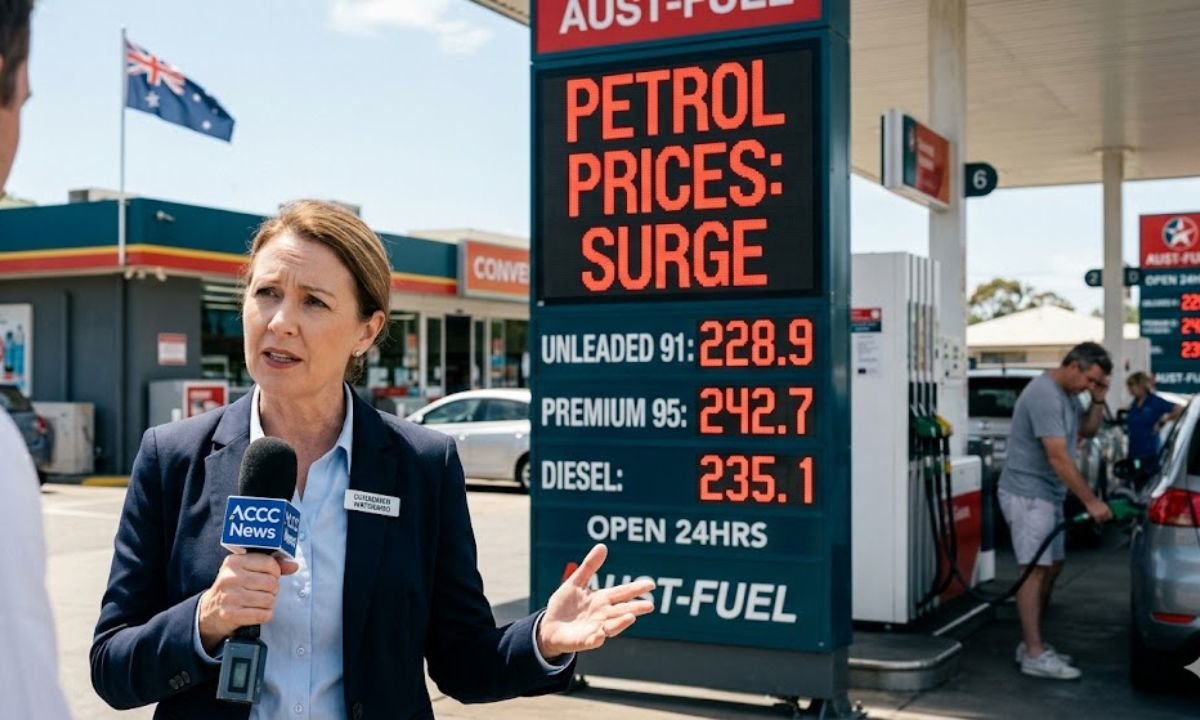

Fuel prices in Australia have shot up over the past few months, prompting complaints from consumer advocates and even Australia’s competition regulator to take action. Less than a week ago, the Australian Competition and Consumer Commission (ACCC) sent its first “Please Explain” letter to several petrol retailers accused of raising prices above perceived market value.
The ACCC’s complaints come after crude oil prices in the Middle East surged, followed by rapid increases in Australian petrol prices during the same period after industrial strike disruptions. Historically, petrol prices in Australia adjust within 1 to 14 days after changes in global crude oil prices, depending on station supply cycles.
Fuel retailers have pointed to this trend to justify their price increases during ongoing geopolitical tensions in the Middle East. However, ACCC Commissioner Anna Brakey has urged petrol retailers to respond to allegations of collusion, claiming some operators may be exploiting market instability.
Australia’s Fuel Pricing Shortcomings
Brakey has raised concerns about potential collusion among retailers, stating there appears to be “no meaningful competition” in fuel pricing. The ACCC has focused its attention on major fuel providers.
In mid-March 2026, the commission sent “Please Explain” letters to large retailers including Ampol, BP, Viva Energy, and 7-Eleven, asking them to justify the “huge and rapid” price increases seen across the country.
Regulators observed that many service stations raised retail prices while still selling fuel purchased earlier at lower wholesale prices. This behavior is commonly described as the “rockets and feathers” pricing pattern—where prices rise quickly but fall slowly.
To improve transparency, the ACCC has also changed its reporting schedule from quarterly to weekly to provide the public with more timely data on fuel pricing trends.
March 2026 Price Snapshot
The rise in fuel prices across Australia’s capital cities has intensified the cost-of-living crisis for households nationwide. In March 2026, several cities recorded price increases of around 60 cents per litre within just a few days.
| City | Average Price Late Feb 2026 (cpl) | Average Price Mid-March 2026 (cpl) | Price Increase (cpl) |
|---|---|---|---|
| Sydney | 175.5 | 210.0 | +34.5 |
| Melbourne | 174.6 | 209.6 | +35.0 |
| Brisbane | 175.5 | 210.5 | +35.0 |
| Perth | 175.4 | 210.1 | +34.7 |
| Adelaide | 174.8 | 210.4 | +35.6 |
| Darwin | 179.6 | 214.3 | +34.7 |
Retail Exploitation vs Supply Chain Constraints
Fuel retailers defend their price increases using the “replacement cost” pricing model. According to this approach, stations price their current stock based on the expected cost of future shipments rather than the price they originally paid.
However, the ACCC and motoring organizations such as the NRMA and RACQ question this explanation. They argue that the speed of the March 2026 price spikes appears inconsistent with normal supply chain timelines.
In South East Queensland, petrol prices jumped to more than 213 cents per litre within 48 hours following a global news event, even though higher-priced crude oil had not yet reached Australian refineries. Regulators say this suggests limited competition within the retail market.
The federal government has proposed increasing the maximum penalties for misleading conduct under Australian Consumer Law. The potential fines could rise from $50 million to $100 million to deter companies from engaging in price gouging.
Regional Hardships and Diesel Shortages
While motorists in cities are frustrated by rising costs, rural and regional Australians face even greater challenges. Some farming communities have reported diesel shortages, raising concerns about a possible “food price shock” if producers cannot secure fuel for harvesting and transportation.
Energy Minister Chris Bowen responded by announcing the release of emergency fuel reserves and temporarily easing fuel quality standards. These measures are expected to boost domestic fuel supply by approximately 100 million litres per month.
Despite these steps, panic buying in certain areas continues to place pressure on supply chains.
The ACCC has warned it will also monitor fuel distribution to ensure independent retailers in regional areas are not disadvantaged if major wholesalers manipulate supply during periods of volatility.
Looking Ahead: Consumer Power and Regulation
The current fuel crisis highlights Australia’s vulnerability to global energy market disruptions and raises questions about retail pricing practices.
The ACCC is using a “name and shame” approach to encourage compliance among retailers. In the short term, motorists can often find relief by using fuel-tracking apps that help them locate the lowest-priced petrol stations.
As regulators prepare for meetings with senior industry executives, the central question remains whether recent price increases were justified responses to global market conditions or opportunistic moves during a national cost-of-living crisis.
For now, Australian consumers are waiting to see whether the regulator will take stronger action to provide relief at the fuel pump.
FAQs
Q1 Why did petrol prices rise so quickly in March 2026?
Petrol prices rose quickly due to rising crude oil prices linked to conflicts in the Middle East. However, the ACCC is investigating why Australian retailers increased prices faster than the typical supply cycle would suggest.
Q2 Is there currently a fuel shortage in Australia?
The Australian government states that national fuel reserves remain sufficient. However, panic buying has caused localized shortages in some regional areas, temporarily disrupting supply chains.
Q3 What is the ACCC doing to stop price gouging?
The ACCC has issued “Please Explain” letters to major fuel retailers and increased monitoring of petrol pricing. The federal government is also considering higher penalties under Australian Consumer Law to discourage misleading pricing practices.
