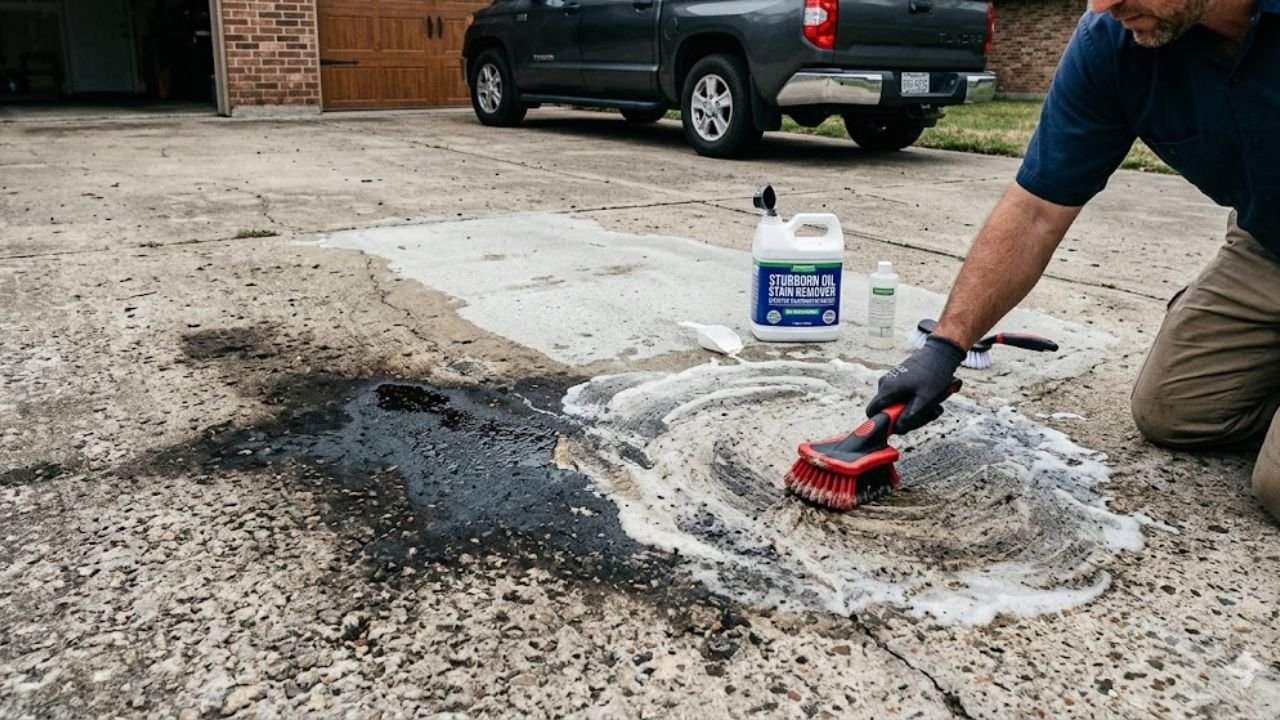
All homeowners have to deal with oil stains, but cleaning oil stains from concrete driveways or garage floors is particularly frustrating, because it is time consuming, tedious, and a big hassle.
Because of how concrete is made, it is easy to see why oil stains sit so stubbornly. While it may seem solid and doesn’t have any holes in it, concrete is constructed in a way that is very porous. It is actually a sponge, consisting of many microscopic bubbles and lots of very tiny, narrow passageways, or capillaries, all throughout it.
When oil drips from your vehicle, concrete starts to draw in the oil due to the surface tension and gravity. When oil is spilled on a laminate floor, it is a surface level problem, but with concrete, it is a problem that is even worse because of how porous it is.
Why Oil Stains Are Hard to Remove
Many people make the mistake of thinking oil stains can be cleaned with a simple wipe or water splash. These methods don’t work because the oil penetrates deep into the concrete. The longer a stain sits, the deeper it bonds, making it harder to remove and creating a slip hazard.
Step 1: Seal the Stain and Use Absorbents
When you see a stain, act immediately. The goal is to stop oil from going deeper into the concrete.
Use clay-based cat litter, sawdust, or absorbent granules
Do not just sprinkle—grind it into the stain using a broom or stiff brush
Leave it for at least 24 hours
Sweep and dispose of properly (not in kitchen garbage)
This step removes bulk oil and makes further cleaning easier.
Step 2: Choose Your Cleaning Method
After removing surface oil, treat the residue trapped in concrete pores. There are three main approaches:
Degreasers: Break down oil molecules
Poultices: Draw oil out using paste (baking soda + dish soap)
Enzymatic cleaners: Use bacteria to consume oil
Cleaning Method
Best For
Effort Level
Environmental Impact
Dish soap and hot water
Fresh spills
High
Low
Commercial degreaser
Moderate stains
Medium
Moderate
Baking soda poultice
Deep stains
Medium
Very low
Enzymatic cleaners
Old stains
Low
Low
Pressure washing
Surface cleaning
High
Moderate
Step 3: Use Heat and Pressure
Hot water pressure washers are more effective than cold ones because heat reduces oil viscosity. You can also use a heat gun or hair dryer before applying degreaser to open pores.
Tip: Avoid narrow nozzle tips—they can damage concrete permanently.
Step 4: Seal the Concrete
After cleaning, let the concrete dry for 2–3 days. Then apply a penetrating sealer to protect it.
Sealers fill pores with silane or siloxane, creating a hydrophobic barrier that repels oil and water while allowing moisture to escape.
Maintenance Tips
Sweep debris regularly
Wash occasionally with mild detergent
Clean spills immediately
FAQs
Q1 Can I use Coca-Cola to remove oil stains?
No. While it contains phosphoric acid, it is too weak for serious stains and leaves sticky residue.
Q2 Will pressure washing alone remove old stains?
No. It only cleans the surface and cannot remove deeply embedded oil.
Q3 Is muriatic acid safe to use?
Muriatic acid is very strong and can damage concrete. Use it only as a last resort with proper safety precautions.
Paradise Diving Club is a professional diving center that offers scuba diving, snorkeling, and underwater adventure experiences.