
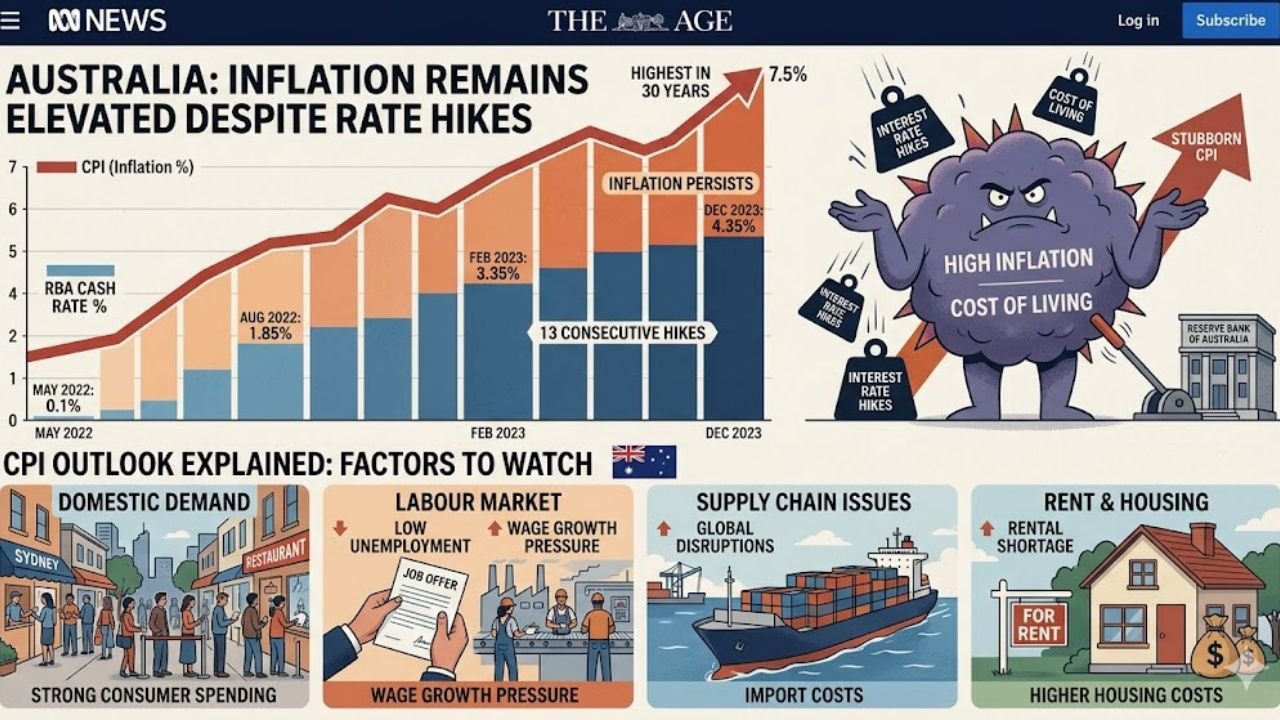

As 2026 begins, Australia finds itself in a difficult situation, as the Reserve Bank of Australia (RBA) has started to reach a breaking point with their aggressive tightening cycle. For the past two years, the RBA has needed to use interest rate hikes in order to defend the Consumer Price Index (CPI), with no soft landing in sight. While the cash rate has increased to the highest in a generation, the cost of living continues to rise. This is driven by a complex mixture of domestic service inflation and a persistent lack of affordable housing. The traditional economic principle that higher interest rates lead to lower prices appears to be weakening.
Shift from Goods to Services Inflation
Australia’s inflation story has shifted from goods-driven inflation to service-driven inflation. Post-pandemic supply chain disruptions have largely eased, but internal pressures have taken over. Key sectors such as insurance, education, and healthcare remain largely unaffected by rate hikes because they fall under non-discretionary spending. Unlike discretionary spending such as holidays or new cars, essential expenses like rent and health insurance cannot be reduced. This limits the effectiveness of monetary policy.
Wage Growth and Service Sector Pressure
Low unemployment is driving wage growth, which supports workers but increases costs for service providers. Businesses pass these higher labor costs onto consumers, reinforcing inflation in the services sector.
Housing and Energy: Permanent Inflation Anchors
The housing and energy sectors are major contributors to persistent inflation. Australia faces a housing supply deficit driven by strong migration and a struggling construction industry. Higher interest rates discourage new construction, worsening the shortage and pushing prices higher. Similarly, the transition to renewable energy is increasing costs in the short term, adding further pressure on inflation.
A Two-Speed Economy
The current economic environment has created a “two-speed” economy. Younger families and first-time homebuyers are under financial stress due to high borrowing costs, while older homeowners benefit from higher interest rates and continue spending. This divide reduces the overall effectiveness of RBA policies, as one segment of the population continues to drive demand while another cuts back.
Limits of Monetary Policy
Structural issues in housing, energy, and services create a floor for inflation that interest rate hikes alone cannot address. This limits the RBA’s ability to bring inflation fully under control. Economists increasingly suggest that government intervention, particularly in infrastructure and housing supply, may be necessary to complement monetary policy.
Outlook for 2026
The RBA is expected to keep interest rates elevated throughout 2026 to control underlying inflation. For households, this signals a long-term shift away from cheap credit and toward financial resilience.
FAQs
Q1 Why does raising interest rates not lower grocery costs?
Food is a necessity, and interest rates primarily impact discretionary spending. Grocery prices are influenced by factors such as fuel costs, weather conditions, and global supply chains, which are outside the RBA’s control.
Q2 Will the RBA begin lowering rates in 2026?
Rate cuts are unlikely unless inflation consistently falls within the 2–3% target range. Due to persistent service inflation, analysts expect rates to remain high or increase slightly throughout the year.
Q3 What is the effect of increasing migration on inflation?
Migration supports economic growth but increases demand for housing and services. In the short term, limited supply—especially in rental housing—leads to upward pressure on inflation.
