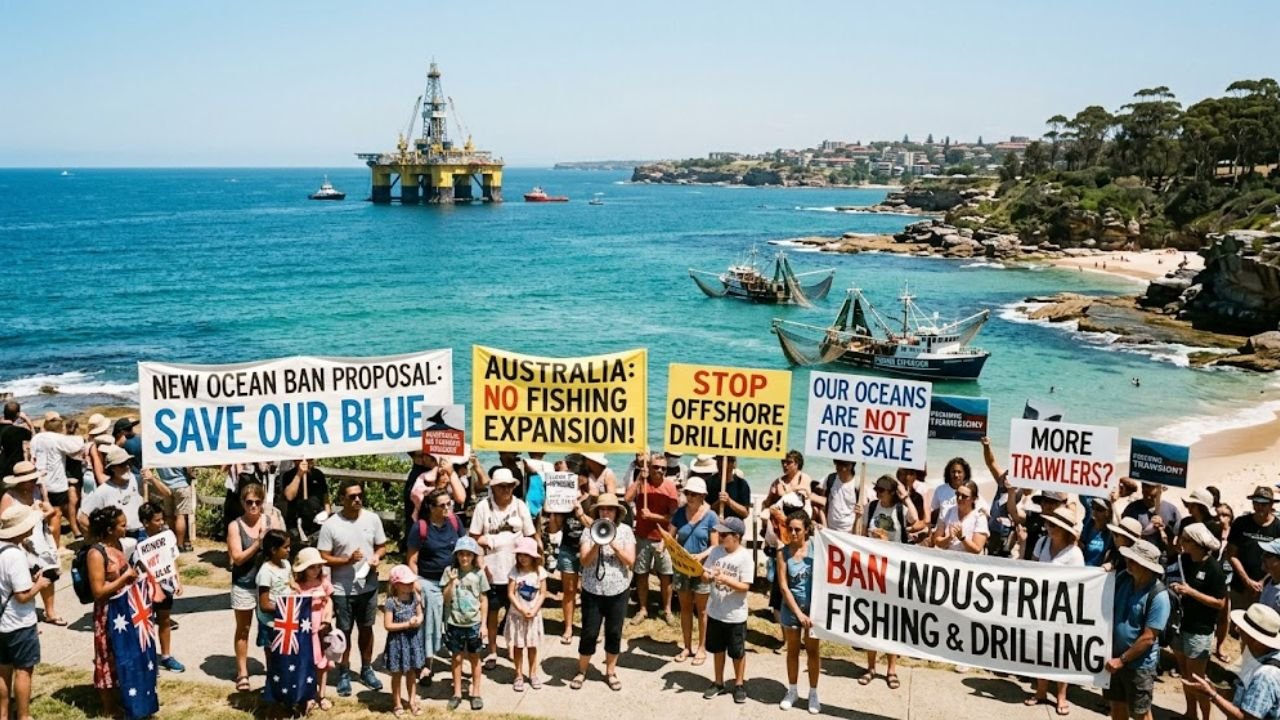
Australia’s government announced a new initiative that could impact the country’s vast waters, protecting more Australian waters than ever before. This legislative proposal is largely shaped by the High Seas Biodiversity Bill 2026 and the new Sustainable Ocean Plan, and aims to protect sensitive ecosystems from industrial development.
This biodiversity initiative, alongside the proposed new bans on gas and oil drilling and additional restrictions on commercial fishing, will help Australia meet its international commitments to the “30 by 30” targets. Protecting 30% of the world’s oceans by 2030, Australia intends to become a “Nature Positive” economy that promotes the sustainability of both the economy and the environment.
Expanding Marine Protection Zones
The 2026 proposal will also give Australia one of the largest marine sanctuary networks on the planet. A centerpiece of the proposal is the designation of eleven new marine sanctuaries, stretching over 80,000 square kilometers of Australia’s eastern and southeastern oceans.
These zones will serve as no-take extraction areas to protect severely impacted waters and expand sanctuary protection of critical shelf habitats.
Protecting Marine Ecosystems and Species
Deep-sea coral structures are critical habitats for species such as the shy albatross and endangered pygmy blue whales. With reduced industrial fishing and seismic testing, these ecosystems will have a greater capacity to cope with climate change and ocean warming.
New Restrictions on Offshore Drilling
The proposal introduces extensive bans on new oil and gas exploration. Environmental laws in 2026 will make fossil fuel extraction approvals significantly more difficult, while also imposing strict limits on seismic blasting in protected areas.
This shift signals a transition toward a sustainable blue economy, favoring conservation and renewable energy over offshore extraction.
Economic Shifts and Fishing Industry Changes
The proposal reflects a balancing act between commercial and recreational fishing interests. The government has introduced commercial fishing license buybacks while promoting recreational fishing as a key economic driver.
Recent analyses suggest recreational fishing contributes more to Gross State Product (GSP) and employment than commercial fishing.
Impact Category
Proposed Measure
Expected Outcome
Offshore Energy
Ban on new oil, gas, and CCS titles
Reduction in seismic disturbance
Commercial Fishing
Licence buybacks and zone closures
Recovery of at-risk demersal stocks
Recreational Fishing
Exclusive zones and $5M register
Enhanced tourism and local jobs
Biodiversity
80,000 sq. km of new sanctuaries
Protection for endangered migrations
Infrastructure
$3.3M tackle-store rebate programs
Economic buffer for small businesses
Challenges in Implementation
Despite its environmental promise, the proposal faces scrutiny over its impact on regional livelihoods and governance complexity. The interaction between domestic legislation and international agreements creates a layered legal framework still under development.
Small-scale fishers have raised concerns about rapid closures and the 21-month cooling-off periods, which could affect local businesses.
Looking Ahead
The success of the proposal will depend on community engagement and compliance. The integration of Indigenous knowledge through Indigenous Protected Areas (IPA) is a significant step forward.
The strategy focuses on key regions such as the Coral Sea, Great Barrier Reef, and Southern Ocean, aiming to position Australia as a global leader in marine conservation.
FAQs
Q1 Does the proposal affect existing offshore drilling projects?
No. Existing oil and gas approvals are protected under transitional provisions. The ban applies only to new exploration titles and seismic activities in protected zones.
Q2 Will recreational fishing be banned?
No. Recreational fishing is largely supported, with some exclusive zones created. However, no-take sanctuary areas will restrict all forms of fishing to allow ecosystem recovery.
Q3 How is the government supporting affected businesses?
A Fisheries Support Package includes funding for license buybacks, tackle-store rebates, and Fish Aggregating Devices (FADs) to encourage sustainable fishing practices.
Paradise Diving Club is a professional diving center that offers scuba diving, snorkeling, and underwater adventure experiences.