
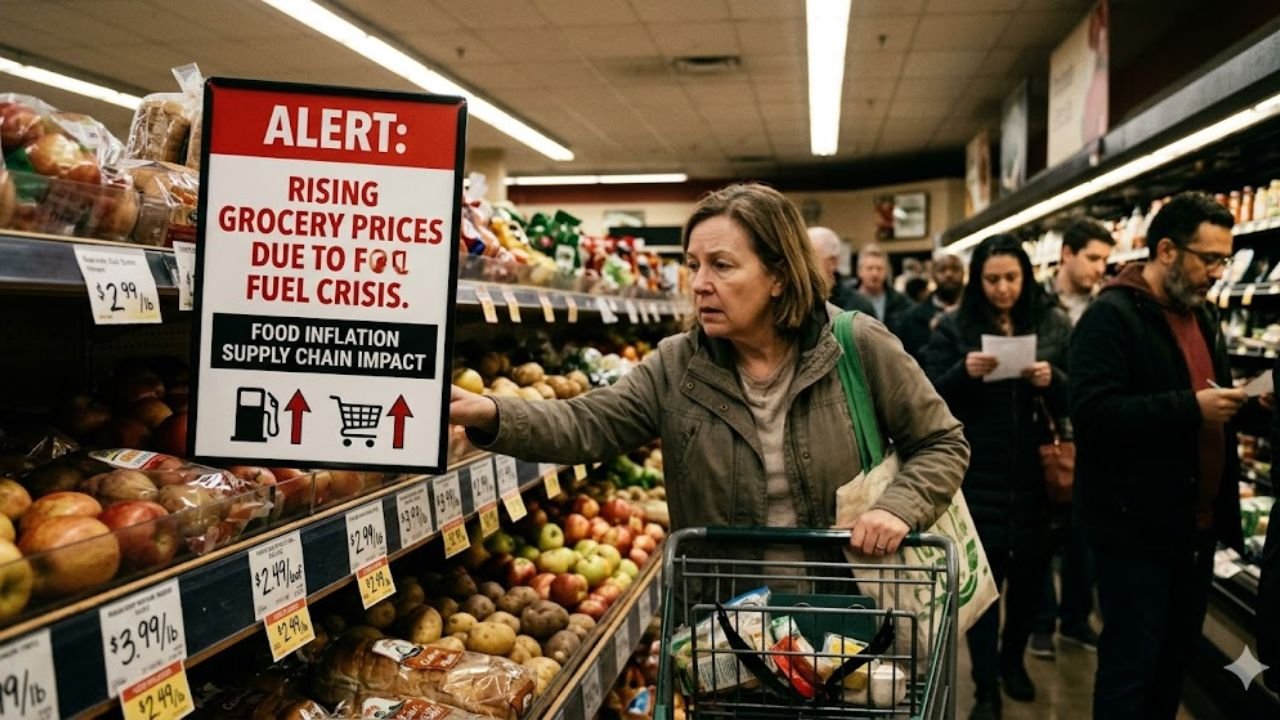

The world economy is extremely unstable right now, with the energy market driving the shadow of food inflation on everyone’s budget. The price of gas and the price of milk seem like two different expenses, but they are connected through logistics, processing, and the chemistry of food.
We are starting the first quarter of 2026, and the effects of high energy prices are no longer theoretical. Every part of the food supply chain, from growing staple crops with nitrogen-based fertilizers to driving refrigerated trucks with fresh produce, is energy intensive.
If the cost of diesel and natural gas increase, producers and retailers will push those costs to the consumers in order to survive.
The Role of Energy Price in The Productivity and Price of Agriculture
Farming is the transformation of energy to food, and modern agriculture uses fossil fuels to achieve the productivity needed to feed the world.
Natural gas is the main feedstock in the production of anhydrous ammonia, which is used to produce almost all nitrogen-based fertilizers globally. When gas prices increase, the costs of nutrients used to grow crops like corn, wheat, and soy also increase which spikes the ‘at-gate’ prices of raw traded commodities.
In addition to raw materials, modern farms also have other mechanical needs such as tractors, harvesters, and irrigation systems. All of these systems need huge amounts of diesel and electricity.
This increase in costs is not only felt by producers, but also by the average family, as the prices of bread, cereals, meat, and dairy increase. This is due to the fact that the cost of feed for livestock is directly related to the cost of growing crops.
Logistics and the Growing Burden of the Middle Mile
As soon as food leaves the farm, it enters a sophisticated logistics system where the main variable cost is fuel. The ‘middle mile’, or the distance from the processing plant to the distribution center, is almost entirely truck dependent.
The trucks used in this type of logistics cannot easily be replaced by electric trucks due to the weight of cargo and long distances. In addition, the cold chain used to keep meat, vaccines, and fresh produce at the appropriate temperature consumes energy continuously.
Freight company fuel surcharges turn pennies per mile into dollars per pallet, translating into significant increases at the store for strawberries, chicken, and fish.
Food Price Sensitivity by Category
- Grains and Cereals: High sensitivity due to fertilizer and harvesting costs
- Fresh Produce: Moderate to high sensitivity due to refrigerated transport
- Meat and Poultry: High sensitivity due to feed production and processing
- Processed Foods: Moderate sensitivity due to industrial manufacturing
- Dairy: Moderate to high sensitivity due to cold chain logistics
Industrial Processing and Manufacturing Costs
The cost of transforming raw ingredients into finished goods is a major part of the food economy. Cooking, canning, freezing, and packaging all require significant amounts of energy.
The production of aluminum cans and plastic packaging is also energy intensive. As utility costs rise, companies face a margin squeeze, leading to either price increases or shrinkflation, where product sizes are reduced while prices remain the same.
Convenience items such as pre-packaged meals and bottled beverages become more expensive as energy costs rise.
Strategic Consumer Adaptation in a High-Inflation Era
The experience of food inflation leading into 2026 requires consumers to adapt and better understand market cycles.
Households are increasingly shifting toward seasonal diets, purchasing locally sourced produce with shorter transportation distances. Bulk buying of non-perishables and a growing preference for private label products are also becoming common strategies.
The fuel crisis has encouraged more deliberate consumption habits and has pushed food production systems to become more efficient.
Understanding the Future of Food and Fuel
Economic narratives are increasingly shaped by the intersection of energy policy and food security. Government interventions such as price controls and buffer stocks may offer short-term relief.
However, the long-term solution lies in separating food production from volatile fossil fuel markets. Food prices will continue to reflect oil prices until renewable energy is widely adopted in industrial agriculture and agrochemical systems.
Every conscious consumer must recognize these trends as a step toward economic self-defense in a global energy crisis.
FAQs
Q1 Why do food prices respond more to fuel prices than other goods?
Food is highly vulnerable because it has a short shelf life, is heavy to transport, and requires energy-intensive cultivation and preservation.
Q2 Will grocery prices drop if fuel prices drop?
Not immediately. Due to existing higher-cost inventory in supply chains, it may take several months before savings are reflected in retail prices.
Q3 How can food inflation be mitigated?
Consumers can reduce exposure by choosing locally sourced goods and minimally processed foods, which cut down on energy-intensive supply chain stages.
