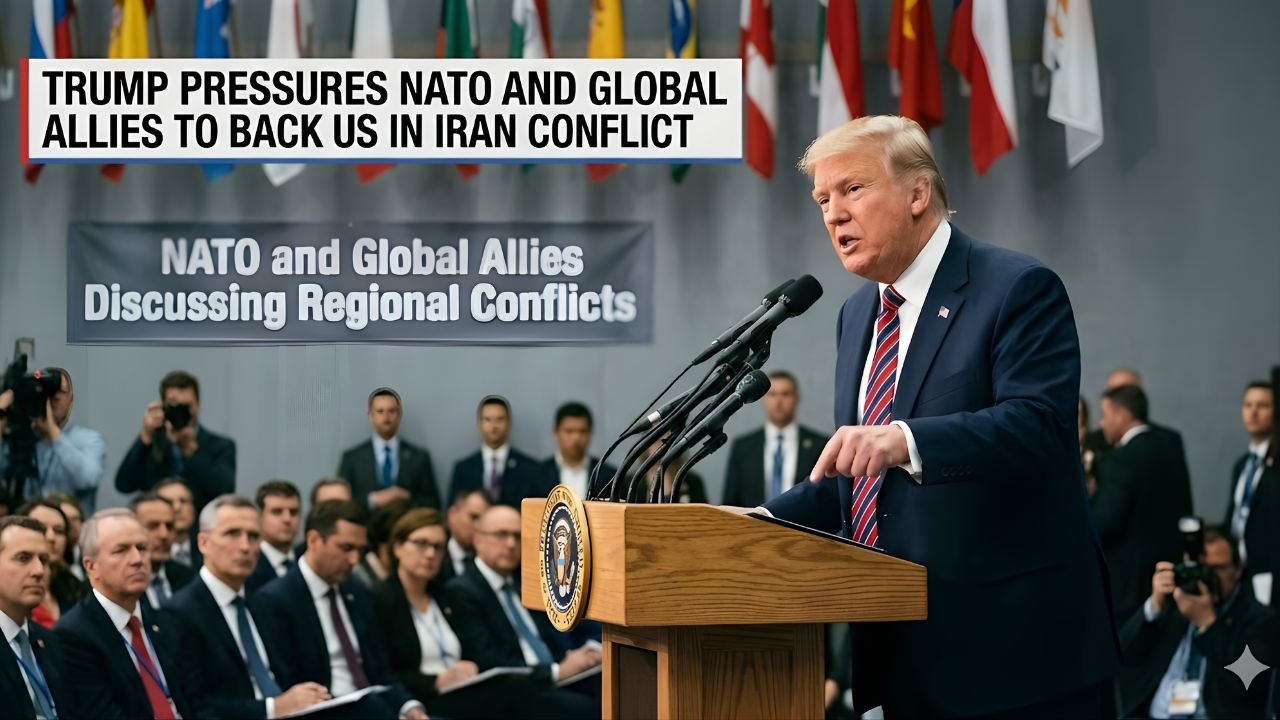

The singular focus emerging from Washington in 2026 is geopolitical pressure centered on complete alignment against Tehran. Donald Trump’s recent communications have shifted from opportunistic remarks suggesting possible cooperation to far clearer and more direct demands calling on NATO and allied nations to support opposition to Iran’s presence in the Middle East. The administration is urging partners to contribute military, logistical, and financial resources in order to strengthen a unified front.
The doctrine of “With Us or Against Us” is now central to this approach. Countries that choose neutrality risk trade consequences and potential reconsideration of defense commitments. This message is particularly visible across European capitals, where debates continue about the best path forward regarding Iran.
Pressure on NATO and the Redefinition of Collective Defense
Recent diplomatic meetings have become arenas of intense negotiation. The meaning of “collective defense,” traditionally associated with defensive protection among alliance members, is increasingly being interpreted in a more assertive way. This emerging doctrine suggests a modified NATO capable of addressing security threats beyond the traditional North Atlantic focus.
Originally designed to safeguard the North Atlantic region, the alliance is now being encouraged by Washington to treat Iran’s ballistic missile program and maritime disruptions as threats to the security of all member states. The White House argues that the confrontation with Iran is not a regional matter but a global security challenge.
This argument attempts to overcome the reluctance of several European nations, particularly France and Germany, which have historically favored diplomatic engagement with Tehran.
Technology, Incentives, and Strategic Loyalty
The United States has also introduced incentives designed to strengthen coalition unity. These include access to advanced missile defense systems, intelligence sharing, and classified technological cooperation. The result is a tiered alliance structure in which countries demonstrating stronger support receive deeper levels of military integration and technological access.
This emerging model reflects a broader strategic shift: a military alliance framework built around loyalty and security guarantees, particularly across Europe and the Middle East.
Economic Warfare and Global Compliance
Alongside military coordination, Washington is expanding economic pressure through the use of secondary sanctions. These measures leverage the global reach of the U.S. financial system, forcing international businesses and sovereign wealth funds to choose between engaging with Iran or maintaining access to the American market.
The objective is to constrain Iran’s economic capacity and reduce funding channels for regional proxy networks. However, the pressure also places strain on allied economies that maintain trade relationships in the Middle East.
Energy Security Pacts and Strategic Realignment
To mitigate these economic disruptions, the administration has introduced a series of “Energy Security Pacts.” Under these agreements, the United States offers liquefied natural gas exports to partner nations as an alternative to Middle Eastern energy supplies.
The intention is to construct a self-contained economic network less vulnerable to disruptions involving Iran or the Strait of Hormuz. While these policies may increase energy costs in the short term, the administration argues that long-term alignment with the United States will produce greater stability.
Strategic Contributions Expected from Allies
| Category of Support | Type of Contribution | Primary Objective |
|---|---|---|
| Military Logistics | Basing rights and overflight permissions | Rapid deployment and enhanced surveillance |
| Financial Sanctions | Freezing Iranian state assets | Cut funding for regional proxy networks |
| Energy Security | Increased domestic production or U.S. LNG imports | Reduce global reliance on Strait of Hormuz oil |
| Intelligence Sharing | Real-time cyber and signal cooperation | Disrupt drone programs and asymmetric threats |
The Brink of a Regional Paradigm Shift
The United States has intensified its containment strategy, and regional dynamics are shifting in response. Traditional Middle Eastern powers are increasingly pressured to choose sides as American military assistance and diplomatic expectations evolve.
This environment presents opportunities for new military coordination between Washington and Gulf nations seeking to reduce Iranian influence. At the same time, analysts warn that excessive pressure could trigger escalation by eliminating diplomatic space.
Despite these risks, the administration views the strategy as necessary. Officials argue that only coordinated maximum pressure combined with diplomatic leverage can compel meaningful changes in Iran’s nuclear and missile policies.
The Future of American Leadership
The current strategy represents a broader test of the international system that emerged after World War II. By demanding stronger alignment from its allies, Washington is redefining the expectations of partnership and global leadership.
Some analysts suggest this could lead to a more “minilateral” world order. Instead of relying on large multilateral institutions, smaller groups of countries may form targeted coalitions focused on specific security challenges.
For the global public, the consequences may include volatile fuel prices and a perception of increasing geopolitical instability. Yet policymakers in Washington view the moment as an opportunity to correct what they consider years of strategic drift.
Whether these policies ultimately stabilize the Middle East or deepen divisions between the United States and its traditional partners will depend on how effectively the administration balances its assertive rhetoric with the economic and political realities facing allied governments.
FAQs
Q1 What is the goal of the U.S. pressure on NATO to treat Iran as a problem?
The objective is to create a coordinated military and economic perimeter around Iran, weaken its regional proxy networks, and pressure Tehran into accepting stricter limits on its nuclear and missile programs.
Q2 How are allies responding to the demand for support?
Reactions are mixed. Some nations align closely with Washington to preserve strategic and trade relationships, while others worry that total isolation of Iran could increase the risk of war.
Q3 What role do sanctions play in this strategy?
Sanctions function as a diplomatic enforcement tool. By leveraging access to the U.S. financial system and market, Washington encourages governments and global businesses to avoid economic engagement with Iran.
