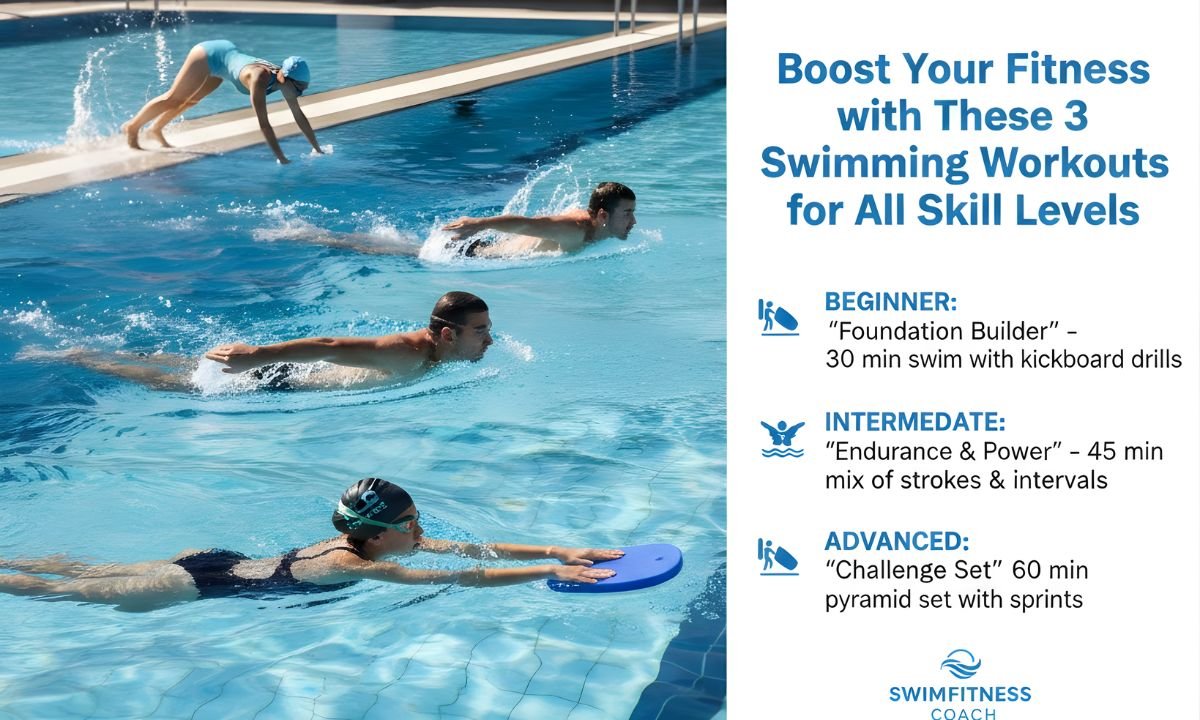

Boosting your fitness with swimming is one of the safest, joint‑friendly ways to build strength, endurance, and cardiovascular health at any age or skill level. Below are three structured workouts—beginner, intermediate, and advanced—designed to be practical, time‑efficient, and easy to follow while prioritizing good technique and injury prevention.
Why Swimming Is a Smart Fitness Choice
Swimming works almost every major muscle group while reducing impact on your joints, which makes it ideal if you have knee, back, or weight‑bearing issues. The resistance of water helps you build strength and stamina, while controlled breathing naturally improves lung capacity and cardiovascular fitness.
From a safety perspective, staying within your comfort zone, avoiding breath‑holding games, and warming up properly significantly lower the risk of muscle strain or dizziness in the pool. If you have heart disease, asthma, or any chronic health condition, talk to a qualified healthcare professional before starting a new routine so your plan matches your current health status.
Workout 1: Beginner Confidence Builder
This workout is for people who can move comfortably in shallow water but may not yet swim long distances without stopping. Focus on relaxed breathing, body position, and taking rest whenever you need it, especially in the first two weeks.
A beginner‑friendly session (20–30 minutes total):
-
Warm‑up: 5 minutes easy walking in the shallow end, shoulder rolls, and gentle arm swings in water.
-
Technique set: 4 × 25 m easy freestyle or breaststroke with 30–40 seconds rest between lengths, concentrating on exhaling in the water and inhaling when your face turns or lifts.
-
Kick set: 4 × 25 m holding a kickboard, kicking gently, with 30 seconds rest; keep your core tight and avoid over‑arching the lower back.
-
Cool‑down: 3–5 minutes light floating or slow breaststroke, then stretch calves, hamstrings, shoulders, and neck outside the pool.
Aim for two to three sessions per week, with at least one rest day between workouts to let your body adapt and recover. Increase distance slowly—adding just one extra length per week helps you progress while staying safe and avoiding overuse injuries.
Sample Weekly Progress Table
Data like this helps you track progress realistically and keeps you from increasing volume too quickly, which supports long‑term joint and heart health.
Workout 2: Intermediate Endurance and Speed Mix
If you already swim 20–30 minutes continuously and know at least one stroke well, this workout helps you build endurance while introducing controlled speed work. It balances aerobic training with short, faster intervals so you improve fitness without pushing into unsafe effort zones.
A typical 40–45 minute intermediate session:
-
Warm‑up: 200 m easy swim (any stroke), plus 4 × 25 m drill (e.g., fingertip drag, catch‑up drill) with 20 seconds rest.
-
Main set:
-
4 × 50 m at a moderate pace (you can speak in short phrases at the wall) with 20–30 seconds rest.
-
4 × 50 m faster, but still controlled, with 30–40 seconds rest; keep your stroke long and avoid holding your breath.
-
-
Technique / pull set: 4 × 50 m using a pull buoy to focus on arm strength and stable body rotation, resting 20–30 seconds between repeats.
-
Cool‑down: 100–200 m easy backstroke or breaststroke, then stretching once you are out of the water.
You can use a simple rule for safety: during most of the set you should feel challenged but not distressed, and your breathing should return close to normal within one to two minutes after stopping. If you feel chest pain, unusual shortness of breath, or dizziness, end the session and seek medical advice promptly.
Workout 3: Advanced Performance Booster
This workout suits experienced swimmers, triathletes, or fitness enthusiasts who are comfortable with interval training and longer total distances. The goal is to improve speed, endurance, and pacing while respecting recovery so you avoid burnout and overtraining.
A 60‑minute advanced session:
-
Warm‑up: 300–400 m easy swim, then 4 × 50 m build (start easy, finish fast each 50) with 20 seconds rest.
-
Main set (interval focus):
-
6 × 100 m at threshold pace (hard but repeatable) with 20–30 seconds rest.
-
8 × 25 m sprints with full recovery (30–45 seconds) between repeats, keeping technique clean even at high effort.
-
-
Stroke / skills set: 4 × 50 m non‑freestyle (backstroke, breaststroke, or butterfly, depending on your proficiency) to balance muscle use and improve overall control in the water.
-
Cool‑down: 200–300 m very easy mixed strokes, finishing with mobility work for shoulders, hips, and ankles.
Advanced swimmers should plan at least one lighter day or active recovery session (such as easy swimming or walking) after a hard interval workout to support heart health, muscle repair, and nervous‑system recovery. Monitoring sleep quality, resting heart rate, and mood is a practical way to catch early signs of overtraining before they affect performance or safety.
Practical Safety and Trust Tips
No matter your level, enter and leave the pool slowly, especially if the water is significantly cooler or warmer than the air temperature. Avoid swimming alone in deep water and follow local pool or open‑water rules, including lifeguard instructions and posted safety signs.
For children, older adults, or people with medical conditions, supervised sessions and beginner‑friendly environments are essential to reduce drowning risk and ensure help is available if needed. Choosing pools that maintain clean water, visible depth markings, and trained staff contributes to a safer, more trustworthy fitness routine that aligns with modern health and search‑quality standards.
FAQs
Q1: How many days per week should I swim for fitness?
Most healthy adults benefit from two to four swimming sessions per week, with at least one rest or light‑activity day in between to support recovery.
Q2: Is swimming safe if I have joint pain or arthritis?
Swimming is often recommended for people with joint pain because water supports body weight and reduces impact, but you should still ask your doctor for personalized clearance and stroke advice.
Q3: How quickly will I see fitness improvements from swimming?
Many people notice better stamina and comfort in the water within three to four weeks of consistent training, provided they increase distance and intensity gradually.
