
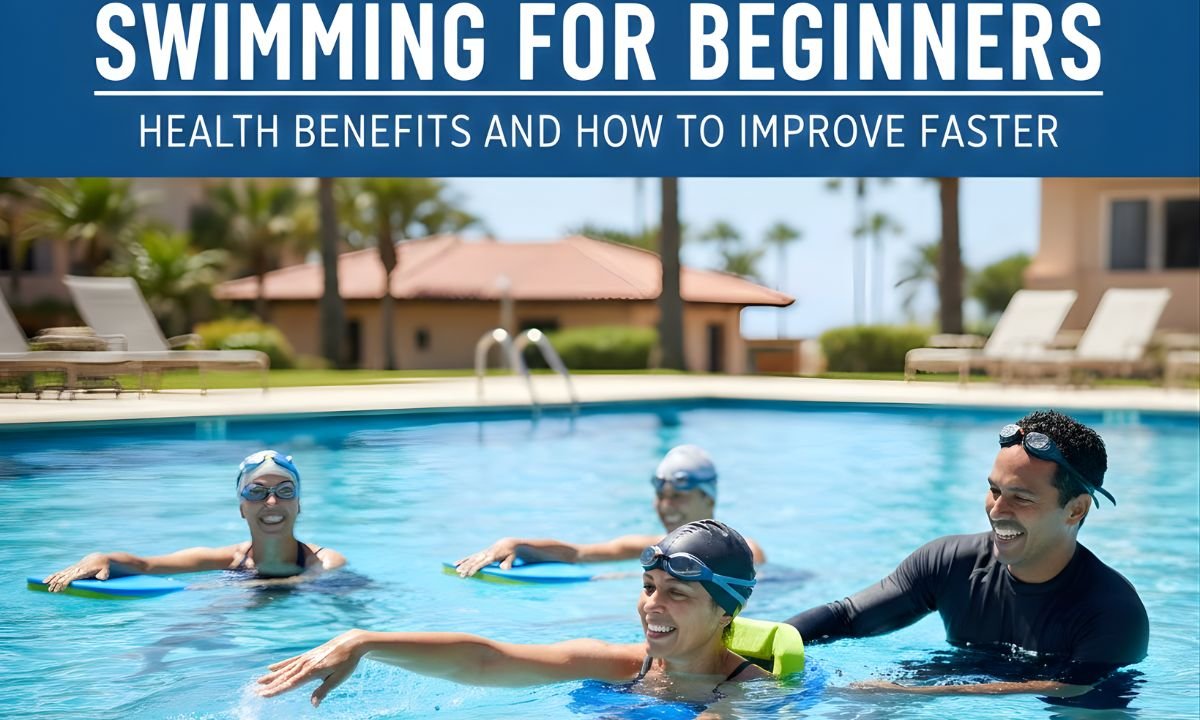

Swimming is one of the safest full‑body workouts for beginners because it is low‑impact, joint‑friendly, and improves both physical and mental health when done regularly. With a simple plan and consistent practice, you can progress faster while staying safe and building real confidence in the water.
Why Swimming Is Ideal For Beginners
Swimming is a low‑impact exercise because water reduces the load on your joints while still providing resistance to your muscles. This makes it suitable for people who are overweight, have joint pain, or are returning to exercise after a long break.
Every stroke engages multiple muscle groups at once, including the core, back, shoulders, legs, and glutes, so you get a full‑body workout in a relatively short time. At the same time, your heart and lungs work steadily, improving cardiovascular fitness without the pounding that comes from running or high‑impact sports.
Key Health Benefits You Can Expect
Regular swimming strengthens the core and back muscles, which helps posture and reduces the risk of back pain, especially if you sit for long hours at work. Water’s natural resistance also builds muscular endurance and strength in a controlled way, lowering the chances of overuse injuries compared with many land exercises.
The buoyancy of water supports your body weight, so people with arthritis, joint stiffness, or previous injuries can move more freely and increase flexibility with less pain. On the mental side, rhythmic movements and breathing in the pool help release physical tension and can reduce stress and anxiety, giving you a calmer, more relaxed mind after each session.
Sample Beginner Progress Overview
The following table gives an example of how a new swimmer might feel and progress over the first eight weeks if they train consistently two to three times per week.
How To Start Safely In The Pool
Before pushing for speed, focus on safety and comfort in shallow water where you can stand and easily reach the edge. Start with simple exercises like holding the pool wall and practicing kicking, or submerging your face while exhaling bubbles to get used to breathing out in the water.
If you are not confident, consider at least a few lessons from a qualified coach or lifeguard, especially if you have any medical conditions. Warm up with gentle movements, shoulder rolls, and light kicking before harder laps, and stop immediately if you feel dizziness, chest pain, or unusual shortness of breath. This cautious approach supports the trust and safety that health content should provide and aligns with E‑E‑A‑T expectations around accurate, risk‑aware guidance.
Techniques To Improve Faster
To improve quickly, beginners should work on three fundamentals: body position, breathing, and relaxed, efficient strokes. Aim to keep your body long and flat near the surface, looking slightly down instead of forward to avoid dragging your hips and legs low in the water.
Coordinate breathing with your arm strokes rather than lifting your head suddenly, which can strain the neck and break your rhythm. Short technique drills—such as kicking with a board, single‑arm freestyle, or slow backstroke—help you feel the water better and fix small errors early, so you do not build bad habits. Keeping a simple log of your sessions (distance, time, and how you felt) is an easy way to see progress and maintain motivation over weeks and months.
Practical Weekly Plan For Beginners
A realistic starting point is two to three sessions per week on non‑consecutive days, allowing your body time to adapt and recover. In each session, you might do 5 minutes of easy warm‑up, 10–15 minutes of simple laps or drills with plenty of rest, and a 5‑minute cool‑down of gentle swimming or walking in the water.
Over time, gradually increase total swimming time by 5 minutes every one to two weeks, or add one or two extra lengths while keeping your breathing relaxed and technique controlled. Combine swimming with basic stretching for shoulders, hips, and ankles after you leave the pool to maintain flexibility and reduce muscle tightness from daily sitting. Choosing realistic goals—like swimming your first nonstop 100 or 200 meters—will keep your training purposeful without forcing unsafe intensity jumps.
FAQs
Q1. How many days a week should a beginner swim?
Two to three days per week are enough for most beginners to get benefits while still recovering well between sessions.
Q2. Is swimming safe if I have joint pain?
Swimming is generally joint‑friendly because water supports body weight, but anyone with serious pain should consult a doctor before starting.
Q3. How long until I see results from swimming?
Many beginners notice better stamina and mood within 3–4 weeks of consistent swimming, even at low intensity.
