
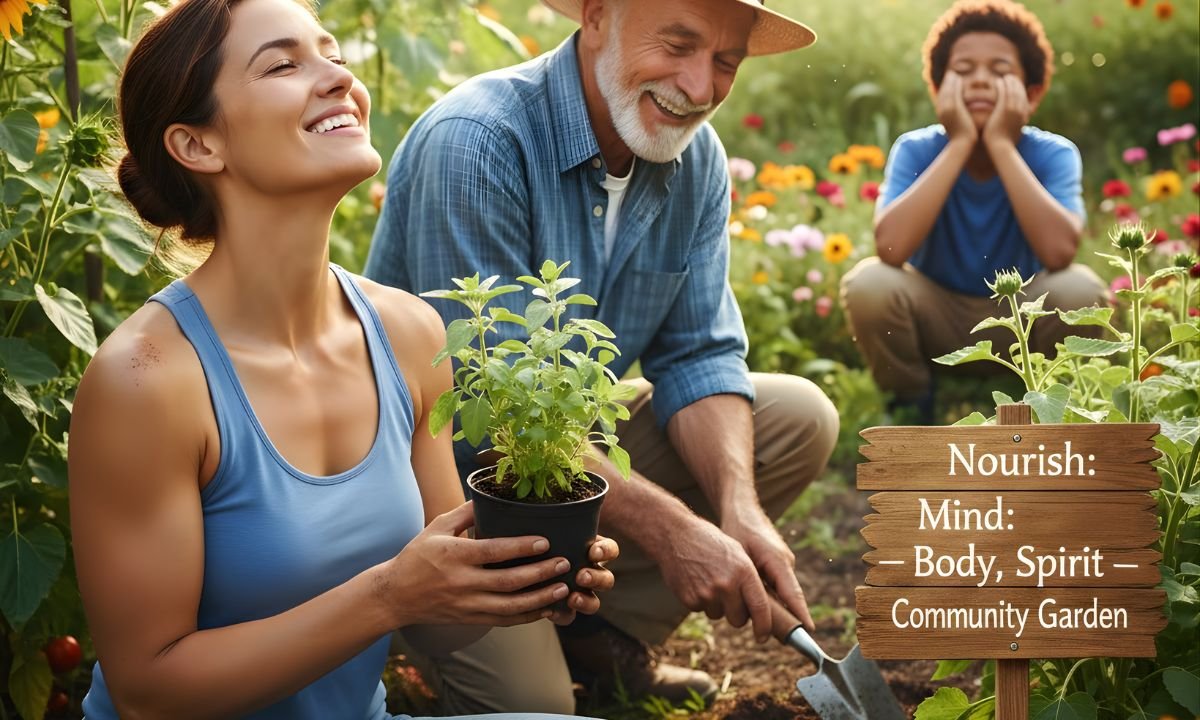

Gardening nourishes the mind, body, and spirit by combining gentle physical movement, time in nature, and a sense of purpose that supports overall well-being.
Gardening And Mental Well-Being
Spending time with plants has been linked to lower stress, anxiety, and depression, because repetitive activities like digging, planting, and watering calm the nervous system. A Texas A&M review of horticultural research reports benefits such as reduced anxiety, improved mood, better attention, and higher life satisfaction in people who garden regularly.
Gardening also supports emotional regulation by offering a healthy outlet for worry, overthinking, or frustration. Focusing on soil, leaves, and small tasks draws attention away from screens and negative thoughts, which helps the brain reset and improves concentration.
Physical Health Benefits In The Garden
Even light gardening—planting, weeding, pruning, or carrying small pots—counts as moderate physical activity that can improve strength, flexibility, and balance. A meta-analysis of gardening interventions found that such activity is associated with reduced fatigue and better overall physical functioning, especially in older adults.
Regular movement in the garden also supports heart health and weight management by gently raising the heart rate without the intensity of gym workouts. Sunlight exposure during morning gardening helps regulate sleep–wake cycles and boosts vitamin D levels, which play a role in bone health and immunity.
Sample Weekly Gardening Health Tracker
Tracking time and mood like this helps gardeners notice how consistent activity in nature improves emotional and physical well-being over weeks and months.
Spiritual Nourishment And Inner Peace
For many people, gardening feels like a quiet, daily meditation that connects them with something larger than themselves. The slow rhythm of planting, observing, and waiting for growth encourages patience, acceptance, and gratitude for natural cycles of life, death, and renewal.
This sense of connection can be spiritual even for those who are not religious, because it roots them in the present moment and their immediate environment. Watching a seed become a flowering plant or a bowl of vegetables reinforces a feeling of meaning and contribution, which supports inner peace and resilience during stressful times.
Community, Purpose, And Resilience
Gardening often becomes a social bridge through shared gardens, terrace gardens in apartments, or local community parks where people exchange seeds, tips, and harvests. Researchers note that shared horticultural activities can help people feel less isolated and more optimistic, especially in challenging periods like the COVID-19 pandemic.
Working toward a clear purpose—such as feeding a family, beautifying a neighbourhood corner, or growing medicinal plants—builds self-esteem and a sense of achievement. These feelings of capability and contribution are closely linked with better mental health outcomes and stronger coping skills when life becomes difficult.
Safe, Mindful, And Sustainable Gardening
To enjoy the benefits of gardening safely, it is important to protect the body with gloves, proper footwear, sun protection, and regular hydration. People with back or joint problems can use raised beds, lightweight tools, and shorter sessions to avoid strain while still gaining physical and emotional benefits.
Choosing organic methods, composting kitchen waste, and using water wisely makes gardening healthier for both humans and the environment. Fresh, home-grown herbs, fruits, and vegetables can support better nutrition and reduce reliance on heavily processed foods, further improving overall health. Even a few pots on a balcony or windowsill can offer meaningful benefits if tended with attention and care.
FAQs
Q1. Can a beginner get mental health benefits from a very small balcony garden?
Yes, even a few pots with herbs or flowers can reduce stress and improve mood when you interact with them regularly.
Q2. How much time should I spend gardening to feel a difference?
Studies suggest that a few sessions per week, around 20–30 minutes each, can already improve mood and reduce anxiety.
Q3. Is gardening safe for seniors with health issues?
With proper precautions like raised beds, support tools, and short sessions, gardening can be a gentle, safe activity that supports mobility and mental well-being for seniors.
